
The importance of prevention in diabetic foot
Living with diabetes means paying attention to details that often go unnoticed, such as foot health. When blood sugar levels remain high, the body undergoes a silent deterioration that damages the nerves and reduces blood flow to the legs.
At our podiatry clinic, our english speaking podologists explain that, if you have diabetes, a simple graze, a poorly treated callus or a small wound on your foot can turn into a serious problem. We call this identifying the “at-risk foot”.
Speed up your treatment
To book an appointment or speak to one of our friendly team members, please get in touch with us using the options below.
What is diabetic foot, and when is a foot considered to be ‘at risk’?
Diabetic foot is a medical complication that occurs when high blood sugar damages the nerves in the legs and reduces the blood flow to the feet. The foot loses its ability to feel pain and to heal its own wounds naturally.
We talk about ‘at-risk feet’ when, even though there are no wounds yet, your feet are already showing early signs of vulnerability. You should be on the lookout if you notice:
- Loss of sensation: You don’t feel the friction from your shoes or minor discomfort.
- Extreme dryness: The skin loses its natural moisture and becomes cracked.
- Foot problems: Deformities develop, leading to calluses caused by pressure.
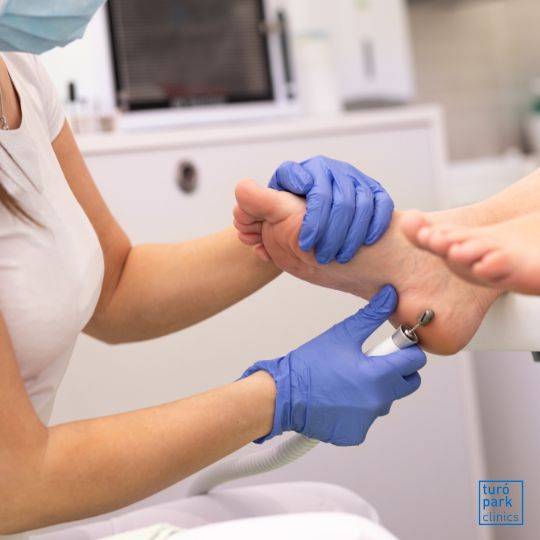
The three factors that put your feet at risk: nerves, circulation and gait
To understand why the feet of people with diabetes are more vulnerable, we need to look at three issues that often occur together:
High blood sugar damages the small blood vessels that supply the nerves. This has three direct consequences for your feet:
- You lose your 'pain alarm': If you lose feeling in your feet, you won’t notice if a stone gets in your shoe or if your footwear causes a graze. You could walk around all day damaging your skin without realising it.
- Changes in the shape of the foot: The nerves that control the muscles weaken, causing the fingers to curl (claw hand) or the points of contact to shift.
- Extreme dryness: The foot stops sweating normally. The skin becomes so dry that it cracks easily, opening the door to bacteria. This disruption of the nervous system has also been studied closely in relation to other neurodegenerative diseases, due to the impact of metabolic stress on the body.
Diabetes accelerates the hardening and narrowing of the arteries that carry blood to the legs. If tissue does not receive enough blood, it also does not receive the oxygen and nutrients it needs to heal. That is why even a tiny graze takes weeks to heal.
Healthy feet are the foundation of a healthy body.
Our podiatrists are on hand to diagnose and treat all your foot and posture problems.
Advanced diagnostic tests in the clinic
To find out exactly what condition your feet are in, our podiatrists carry out a thorough examination using three simple tests.

Sensitivity test
We use a small, flexible plastic thread (monofilament) and a vibrating instrument (tuning fork). We gently touch various points on your foot to check whether you can feel the touch and the vibration.

Study of the digital footprint
You walk on a platform fitted with sensors that plot a map of your footprint on the screen. This test clearly shows which areas of your foot are under excessive pressure, so that you can correct the issue.

Circulation tests (Ankle-Brachial Index)
We compare the blood pressure in your arms with that in your feet using a portable ultrasound (Doppler) device, which causes no discomfort.
Modern treatments to protect and heal your feet
→ Professional cleaning and care (chiropody)
We safely and hygienically remove calluses and corns before they damage the underlying skin. You should never use callus removers or cut away calluses at home, as there is a very high risk of causing an infection.
→ 3D download templates
Custom-designed on a computer following an analysis of your gait. They are made from very soft materials that cushion the impact of walking and relieve pressure on vulnerable areas (off-loading effect).
→ Therapies to speed up healing
If there is already a small superficial wound, we can use platelet-rich plasma (PRP) or hyaluronic acid gels. These biological treatments stimulate the cells to heal the skin much more quickly.
→ Minimally invasive surgery
If you have a bunion or a claw toe that constantly rubs against your shoe and is at risk of causing a wound, we can correct this with very simple surgical procedures. These are carried out through incisions of just a few millimetres, do not require a hospital stay, and involve a quick recovery.
Guide to daily care at home: What you should do
Daily care at home is your best tool. Follow these practical tips recommended by our specialists:
Daily Inspection
Examine your feet every day using a mirror to detect any redness, blisters, or cuts early on.
Washing and Drying
Wash with lukewarm water (maximum 37°C) and dry thoroughly by gently patting with a towel, paying special attention to the spaces between your toes to prevent fungal infections.
Urea-Based Moisturizing
Apply a urea cream (between 10% and 20%) to the soles and heels to prevent cracking, but never between the toes.
Straight Toenails
Always cut your toenails straight across and use an emery board. Do not round the corners to prevent them from becoming ingrown.
Continuous Protection
Never walk barefoot (even at home) and wear comfortable, flexible shoes without internal seams, paired with seamless, non-binding socks.
Book an appointment with our podiatrists
Frequently Asked Questions About Diabetic Foot at Turó Park Clinics
How often should I see a podiatrist if I have diabetes?
What is the difference between a diabetic off-loading insole and a standard insole?
Why does diabetes make it harder for foot wounds to heal?
When should I see a podiatrist urgently for a foot injury if I have diabetes?
Podiatrist specializing in clinical biomechanics and functional re-education at Turó Park Clinics (Barcelona). With a solid background in minimally invasive foot surgery and the design of transition programs to minimalist footwear, she combines daily clinical care with ongoing training in sports podiatry and regenerative medicine. Her approach integrates the latest scientific evidence with a patient-centered vision, always seeking effective short- and long-term solutions.
View full profile and credentials →Medical societies and organisations


































Take a look at the financing options
Don’t worry, we’ll take care of everything!